Bethlehem E-Bike Network
Planning phase. An independent plan; nothing is funded or built yet.
A planned network of solar-powered stations where you can take a bike, mostly electric, and ride from any station to any other: to the park, to the bus, to work.
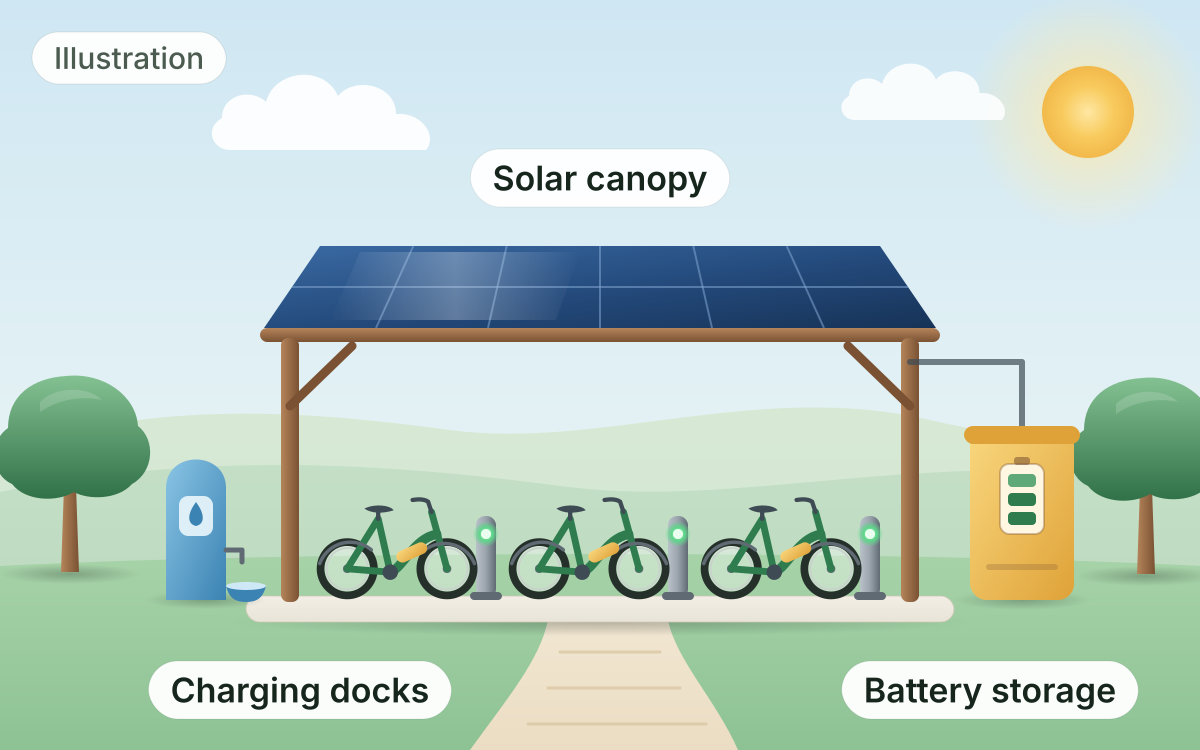
At a glance
E-bikes first
Then regular bikes, e-scooters (where state and local rules allow; may start later), mountain bikes, and adaptive, cargo and tandem bikes, mixed by demand.
Natural energy
Solar canopies and batteries charge bikes as they dock. Wind, geothermal and heat recovery later.
Planned stations
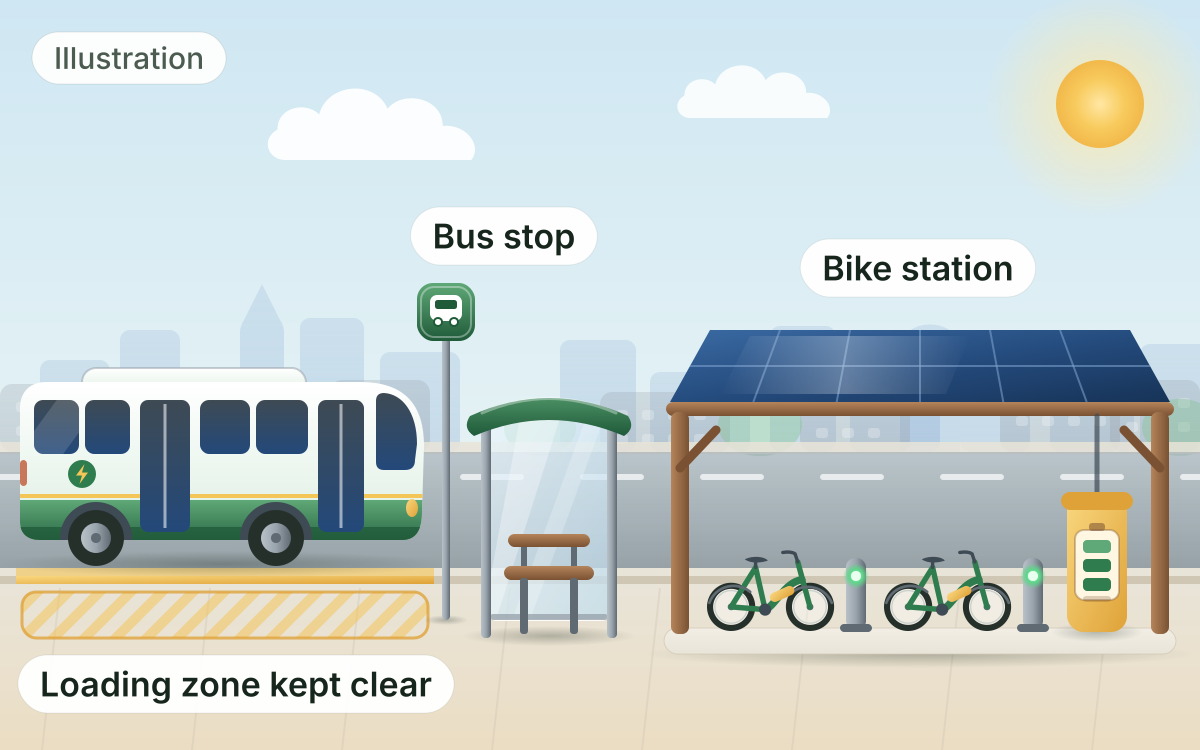
One at every park, two at bigger parks, and one beside each planned Bethlehem Connect stop, where owners agree.
Parks covered
Every public park in the service area gets a station; bigger parks and long trails get one at each end.
Scooters and skate gear
E-scooters at hubs where state and local rules allow (may start later). Skate gear to borrow by skate parks.
Pets, water, restrooms
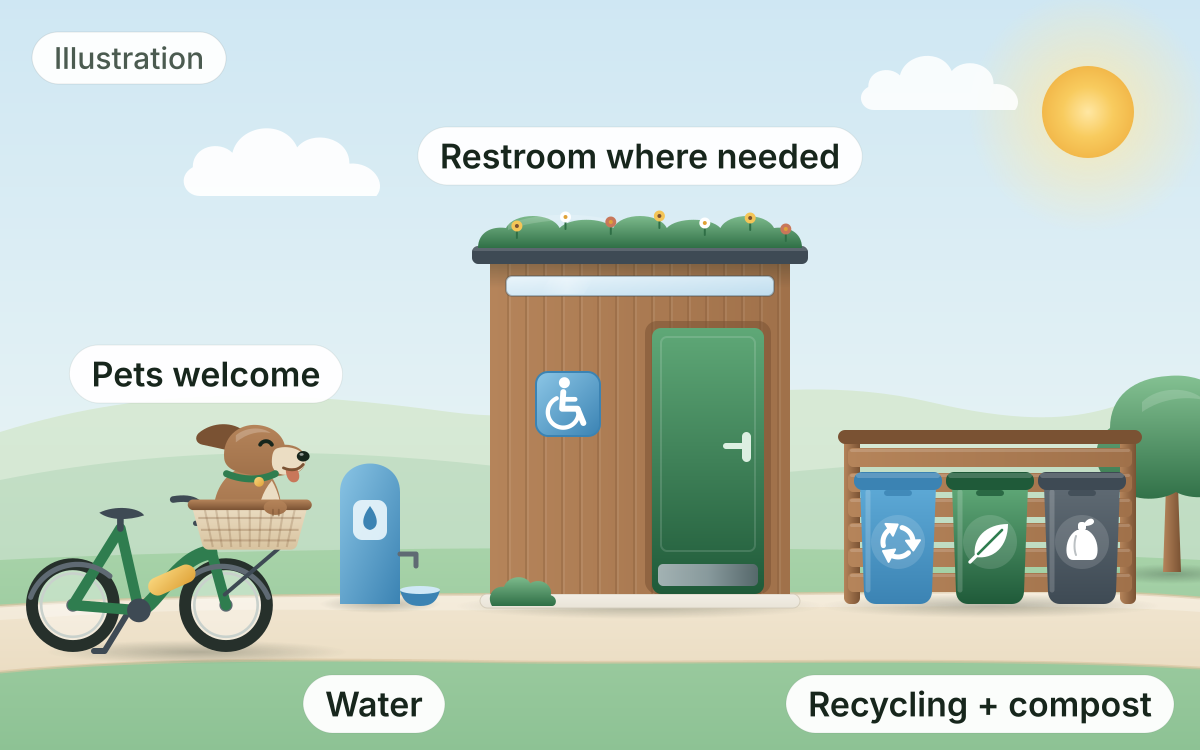
Pet baskets, bottle fillers, and a modern restroom where a park hub has none.
Station locations are shown only as general areas until each landowner agrees in writing.
Summary
The short version. The longer brief has the details.
The idea. A planned network of solar-powered bike stations across Bethlehem, PA. Take a bike at any station, leave it at any other. About half would be e-bikes, then regular bikes, e-scooters (where state and local rules allow; may start later), mountain bikes, and adaptive, cargo and tandem bikes, mixed station by station by demand. Docks would charge e-bikes automatically under solar canopies with on-site batteries.
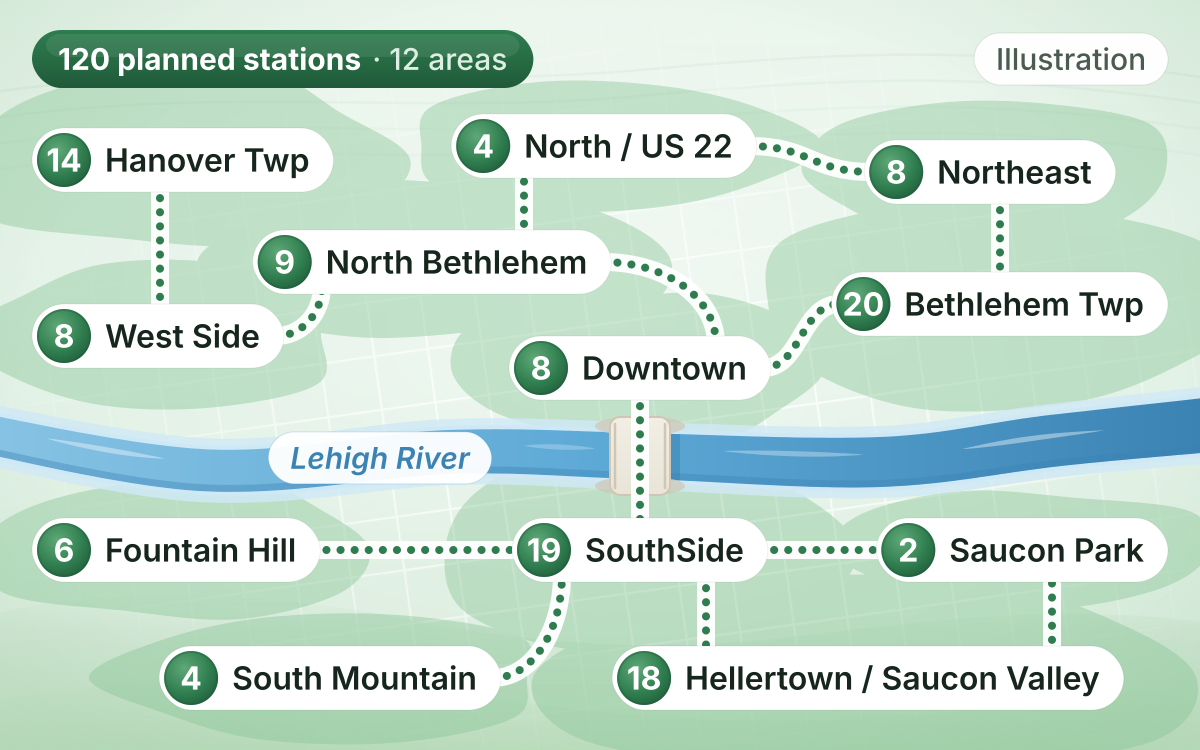
Where. About 120 planned stations: one at every park (two at bigger parks) and beside planned Bethlehem Connect electric-bus stops (a separate independent plan). They'd also go downtown, on the SouthSide and near campuses, with each landowner's agreement.
How it works. Unlock with an app, QR code or kiosk. Trip data is aggregated, private by default and never sold. A future opt-in rider app could track your miles and sync with apps you choose.
Safety. Licensed electricians do all electrical work. Batteries and chargers would meet fire and electrical codes, and every site would need fire-marshal review. Every station would have an ADA-accessible route.
Phases. A 6–10 station pilot comes first, then a Bethlehem-wide network, then the Lehigh Valley and other Pennsylvania towns. Small one- and two-seat electric vehicles come later, after legal review.
Approach. Buy proven bike-share technology; build only the privacy-first analytics and the rider app's extras. Community chat lives in Project OS.
People and planet. It serves riders without a car, low-income riders and people with disabilities, with recycling at every station and certified battery recycling.
See it
Four more illustrations: a transit stop, the network, park amenities and the rider app. Tap any image to open it full size.
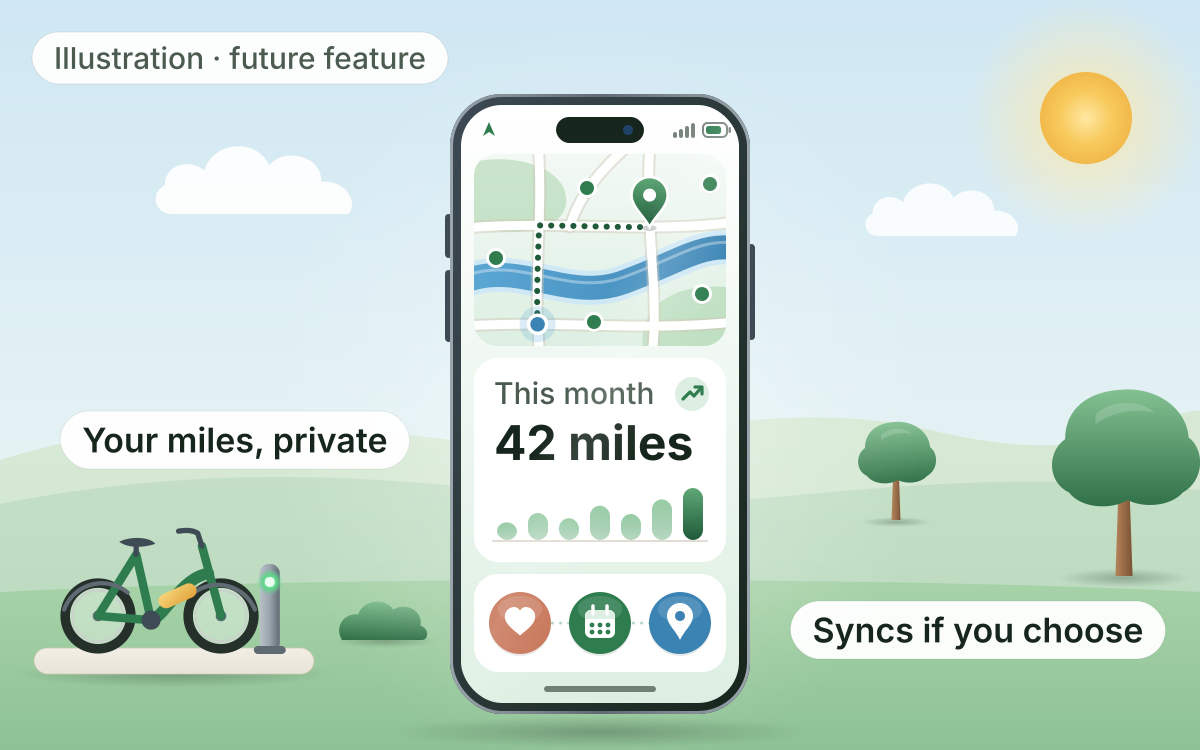
Coming later: the rider app
Planned for after the pilot. None of this is built yet, and your data stays yours.
Your miles
Track your own ride mileage, time and estimated CO₂ saved. Opt-in, private to you, and you can delete it any time.
Smart network
Live dock and bike availability, plus aggregated analytics that help place stations and rebalance bikes. Never sold.
Syncs with your apps
Later, you choose whether to connect fitness, calendar or transit apps. You can disconnect any time.
Ways to take part
Our long-term aim is a future where money matters much less and what counts is people and the work they do together. That's an aim, not a promise, and no role is open yet. When roles open, you'd join through Project OS.
Open roles
Station ambassador, station check and tidy, and path and access checks. No training needed, and shifts are up to 2 hours.
Trained roles
Ride leader, skate-gear locker helper and community chat helper. A short course unlocks each one.
Qualified crews
Licensed electricians, battery and solar technicians, fleet technicians and drivers. Safety-critical work stays with them.
Every role has a one-screen quick guide, with quests, badges and seasonal leaderboards you choose to join. Hours and risk are never scored. Read the role guides.
Places
One site, many places. Each place is one entry in a data file, and Bethlehem is the first. A new town is added only for a real reason, starting as an idea with every permission "not requested".
Planning phase
Bethlehem, PA
A station at every park, two at the bigger ones, and one beside each planned Bethlehem Connect stop. 120 planned stations in 12 general areas: 104 at 86 parks and 16 at Bethlehem Connect stops.
Connected ideas
Separate independent plans; methods are shared, never data, and nothing is agreed.
- Bethlehem Connect: a station beside every planned stop
- Lehigh Valley Energy & Logistics Hub: natural energy for the stations later, under the utility's rules
- Project OS: the shared sign-up, roles, chat and map
Add a place
Add one entry to the places file and its stations to a data file made from the place-neutral station template. No new site and no copied code.
Reuse it anywhere
Built so another town, campus or country can copy it, starting at "idea" with every permission "not requested". Beyond Bethlehem is an aim, not a plan or a promise: other Pennsylvania towns, across the US (for example the Midwest) and worldwide.
Copy the kit
A station at every park and transit stop, demand-weighted fleet profiles, one place-neutral station record, and the safety and privacy checklists. No people or contacts included.
Check it locally
Land and owners, permits, e-bike, e-scooter and trail laws, climate, language, currency and units are always checked where it's used.
Natural energy only
Solar, wind, permitted hydro, geothermal and heat recovery, stored in batteries, thermal or pumped storage, through regional Energy & Logistics Hubs and the utility's rules.
Related projects: Project OS (shared sign-up, map and chat) and Aethon (ocean exploration) are part of the same mission and share methods, never data. All are in their planning phase.